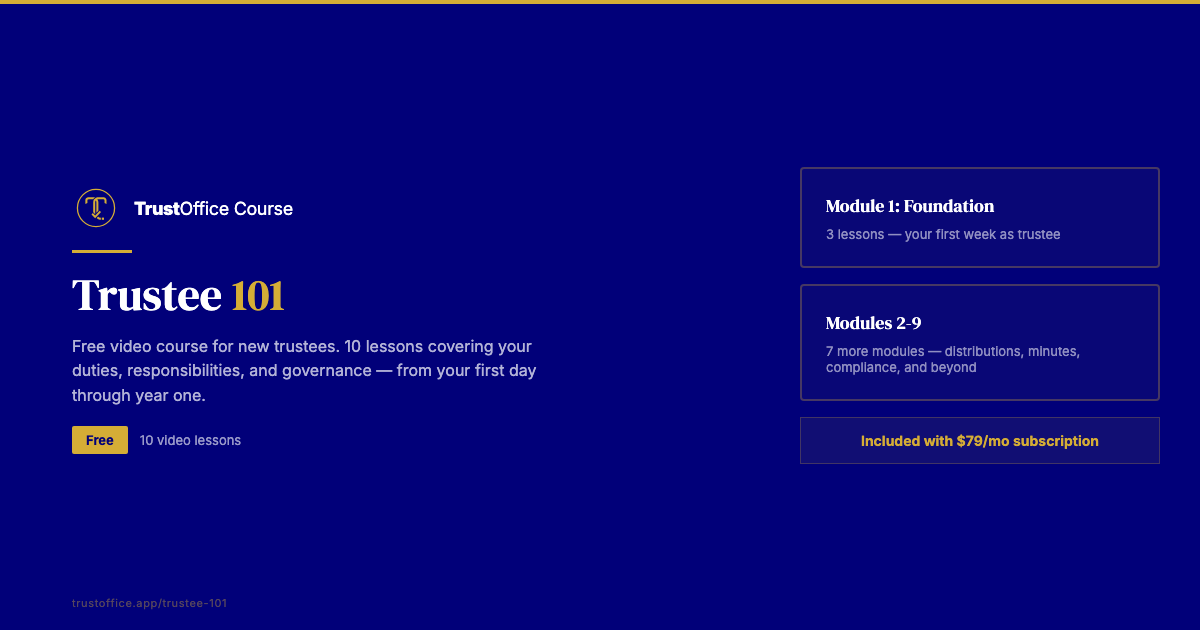
Become enrolled in a Unpaid Fiduciary Professional Course to Enhance Your Proficiencies Right Now
Joining a gratis trustee program can markedly enhance one's work-related capabilities. It communicates essential information about fiduciary duties and investment management. Course participants can learn at their own schedule while collaborating with experienced professionals. This opening not only deepens knowledge but also enables professional advancement. However, many may wonder what definite skills they can expect to secure and how these can be used in real-world applications.

Important Expertise You'll Learn From a Free Trustee Course
A complimentary trustee program provides participants with fundamental knowledge vital for sound management and oversight. The course content generally includes key areas such as financial literacy, allowing trustees to understand budgets, financial statements, and investment approaches. Participants also acquire understanding into legal responsibilities, guaranteeing compliance with regulations and moral principles.
Furthermore, the course strengthens tactical planning skills, preparing people to add to long-term organizational objectives. Strong communication abilities are another important element, enabling board members to express ideas distinctly and engage interested parties effectively.
Furthermore, collaborative and managerial skills are emphasized, encouraging teamwork among board members and promoting a constructive decision-making process. Conflict resolution techniques are also taught, preparing participants to handle disagreements with professionalism.
Fundamentally, these competencies not only equip individuals for their roles as trustees but also develop their overall administrative prowess, making them key players to any organization.
Primary Benefits to Register for a Free Trustee Training for Career Development
Many practitioners look for strategies to improve their professional lives, and completing a free trustee course presents unique advantages that can greatly boost one's professional path. To start, these training programs provide essential knowledge about fiduciary responsibilities, enhancing a professional's credibility in their domain. Comprehending the ethical and legal obligations of a trustee can open up new career opportunities and duties.
Additionally, networking with industry professionals and colleagues during these training programs can generate valuable connections that may facilitate career advancement. Participants also develop hands-on expertise in accounting and oversight, which are highly valued in multiple fields. Finally, the flexibility of online formats enables individuals to study at their own pace, making it easier to manage education with existing work responsibilities. Overall, signing up for a free trustee course not only enriches knowledge but can also considerably enhance professional opportunities and career growth.
Uncovering the Greatest Unpaid Trustee Training for You
How might one identify the most suitable free trustee course from the wide variety accessible? First, one should consider their particular requirements and vocational aims, establishing what expertise or understanding shortfalls they intend to cover. Next, investigating curriculum and design is essential; a structured course description can suggest whether the course will fulfill personal goals.
Moreover, reviewing the qualifications of the instructors can supply understanding into the excellence of instruction delivered. Reviews and testimonials past attendees are essential, as they reflect real experiences and results.
Finally, reviewing the flexibility of the course layout—whether it is self-paced or organized—can help in selecting a program that suits one's way of living. By taking these elements into account, individuals can make a more thoughtful choice, ensuring the selected program aligns with their professional aspirations and learning preferences.
Proven Advice for Receiving Maximum Value from Your Trustee Course
To get the most out of the benefits of a trustee course, a planned approach is needed. Participants must start by setting clear goals and identifying the particular skills or knowledge they want to gain. Active engagement in the learning process is vital; this involves joining discussions, asking questions, and working together with peers. Consistently reviewing course content supports better understanding and retention of key concepts.
In addition, it is beneficial to take notes and create summaries of important topics, enabling simpler review later. Connecting with peer attendees can offer valuable insights and support, fostering a community atmosphere. Leveraging additional materials, such as suggested texts or online forums, can improve comprehension and application of acquired knowledge.
Finally, utilizing the knowledge in practical scenarios, whether through practical applications or simulations, deepens understanding and fortifies assurance in trustee accountabilities. By following these practices, individuals can leverage fully their trustee course experience for growth in both personal and professional realms.
Everyday Applications of Fiduciary Competencies in Governance
Trustee abilities are vital in effective governance, enabling individuals to navigate complex organizational landscapes. These competencies are critical for promoting transparency, accountability, and ethical decision-making within various entities, including nonprofits, educational institutions, and corporate boards. Trustees outfitted with strong analytical abilities can assess organizational results, financial health, and compliance with regulations, thus improving overall governance.
Moreover, effective communication competencies allow trustees to engage with stakeholders, guaranteeing that multiple viewpoints are taken into account in decision-making processes. Dispute management skills are just as vital, since they support preserve harmony and cooperation among board members and other stakeholders. Additionally, forward-thinking planning abilities allow trustees to align organizational goals with broader missions, guaranteeing endurance and growth. In this way, the use of trustee skills in governance reinforces institutional frameworks but also promotes trust and integrity within communities and organizations.
Frequently Asked Questions
Are No-cost Trustee Training Recognized by Industry Organizations?
Free trustee programs may not always be acknowledged by industry bodies. Accreditation usually depends on the course provider and the specific accrediting body, so enrollees should confirm credentials before signing up for any course.
How much time Does a Standard Free Trustee Course Take to Complete?
A common free trustee program generally takes between four to eight weeks to complete. presentation Course length may vary depending on the supplier, content depth, and student engagement, allowing for adaptability in learning schedules.
Is it Possible to Get a Certificate Upon Completing a Free Trustee Course?
Yes, people can generally receive a diploma after completing a free trustee program. However, certificate options may differ by organization, so participants should confirm the particular requirements with the program provider before registering.
What Limitations Apply on the Quantity of Trustee Courses I Can Enroll In?
Generally, there is no limit on the amount of trustee courses one can enroll in. Learners are motivated to engage in multiple courses to deepen their understanding regarding trustee duties and organizational management.
What Qualifications Are Required to Enroll in a Free Trustee Course?
To enroll in a costless trustee program, participants typically need a essential understanding of financial principles, dedication to the course duration, and sometimes prior experience in fiduciary roles. Specific requirements may vary by institution.